
Texas Roadhouse Hand-Cut Steaks Menu: Prices, Sizes & Calories (2026)
Quick Answer: Texas Roadhouse hand-cuts every steak on this menu in-house—USDA Choice sirloin, ribeye, strip, and filet, trimmed fresh by an in-house butcher and never frozen. Prices start around $13.49 for a 6 oz sirloin and climb toward $29-30 for the largest cuts, with two made-from-scratch sides and unlimited fresh-baked rolls included on every plate. Prices vary significantly by location, so the figures should be treated as typical examples rather than nationwide prices.
Hand-Cut Steaks Texas Roadhouse Menu & Prices
Below is every Texas Roadhouse hand-cut steak and steak-based specialty on the current menu — sizes, price ranges, calories, what actually happens in the butcher’s cooler before your steak hits the grill, and which cut makes the most sense for your appetite and budget.
| Steak | Typical Size(s) | Starting Price | Calories |
|---|---|---|---|
| Hand-Cut Sirloin Best Value | 6, 8, 11 oz | $13.49 | 250 (6 oz) |
| New York Strip | ~9–14 oz | $22.99 | 420 |
| Dallas Filet (Filet Mignon) Chef’s Pick | 6–8 oz | $26.99 | 270 (6 oz) |
| Ft. Worth Ribeye Top Seller | 10, 12, 16 oz | $24.99 | 960 (12 oz) |
| Bone-In Ribeye | 20 oz | $29.99 | 1,480 |
| Porterhouse T-Bone | 23 oz | $28.99 | 1,040 |
| Filet Medallions (3 pc.) | 9 oz total | $27.99 | 970 |
| Prime Rib Popular | 10–16 oz | $25.99 | 950 |
| Road Kill (chopped sirloin) | Single portion | $12.49 | 760 |
| Steak Kabob | Single portion | $19.49 | 920 |
All steaks include a choice of two sides and unlimited fresh-baked rolls. Prices are starting points and vary by location. If you are in the mood to check the complete Texas Roadhouse menu, you can explore our latest prices and menu options.
What Makes a Texas Roadhouse Steak “Hand-Cut”?
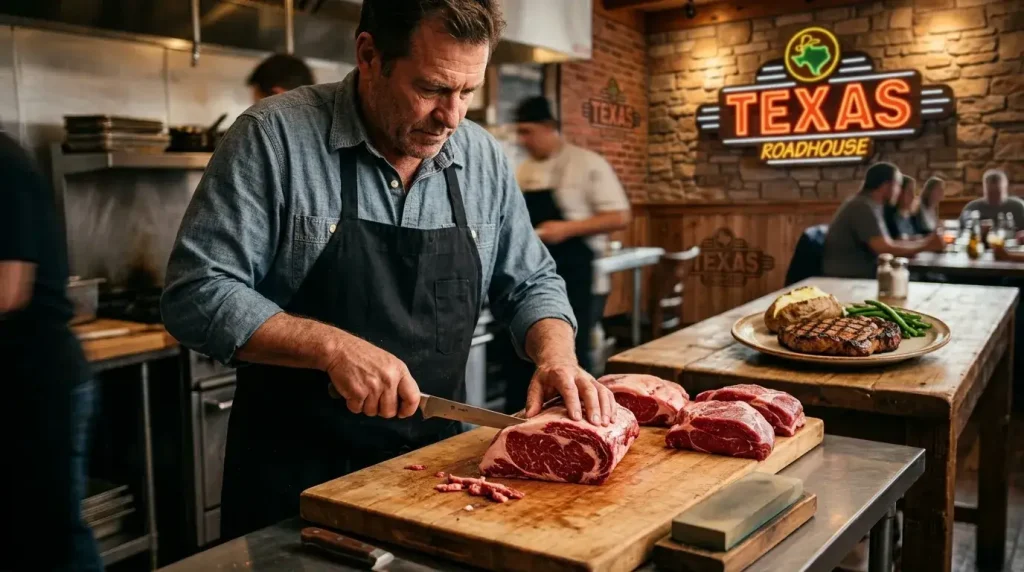
Every steak here starts as a whole beef loin, not a pre-portioned cut from a box. Each restaurant employs an in-house butcher, officially called a meat cutter, who trims and portions steaks by hand throughout the day in a cooler held around 34°F.
Cold enough to keep the meat at peak freshness without ever freezing it. A single location’s meat cutter cuts through roughly $1 million worth of beef in an average year.
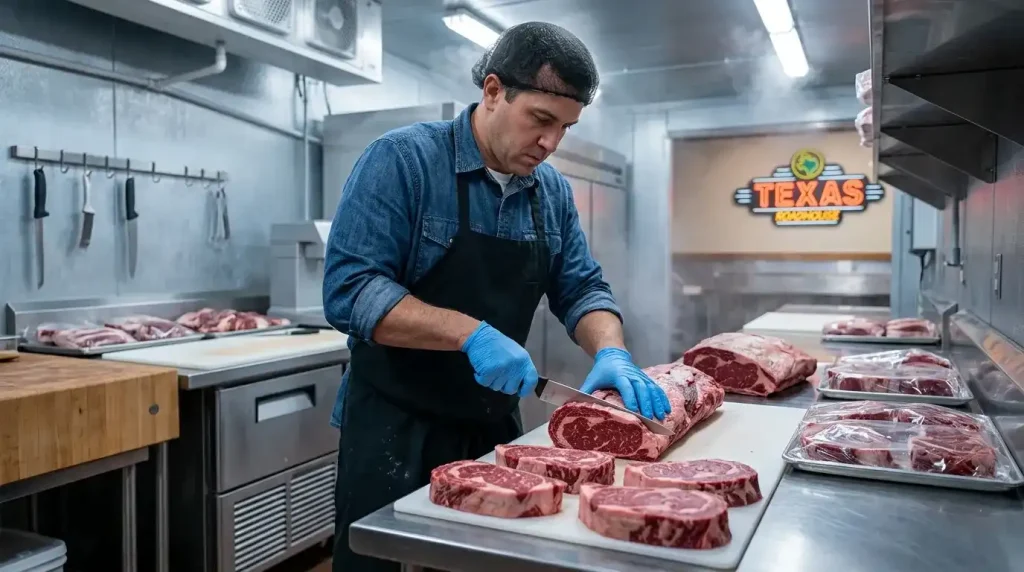
- USDA Choice Quality: The beef is graded USDA Choice, the second-highest USDA quality grade, and much of it is aged in-house before cutting to improve tenderness.
- Cut-In-House Freshness: Except for large bone-in cuts like Porterhouse T-Bone, is not always cut tableside the same way the smaller steaks are. Every other steak on this menu is cut in-house, by hand, the same day it’s served.
Every Hand-Cut Steak on the Menu, Explained
From butter-soft tenderness to rich, juicy marbling, every cut on the Texas Roadhouse Steak Menu brings its own distinct flavor and texture profile. Below is every Texas Roadhouse Steaks specialty option, including sizes, price ranges, and nutritional facts.
Hand-Cut Sirloin
The best-seller and the most affordable true steak on the menu. Sirloin is leaner and firmer than ribeye, with a bold, beefy flavor that holds up well to toppings like sautéed onions or mushrooms.
| Size | Typical Price Range | Best For |
|---|---|---|
| 6 oz | $13.49–$16.99 | Lunch, Early Dine, lighter appetites |
| 8 oz | $16.99–$19.99 | Standard dinner portion |
| 11 oz | $19.99–$23.99 | Bigger appetites |
At 250 calories and 46 g of protein, the 6 oz sirloin also has one of the best calorie-to-protein ratios on the entire menu.
New York Strip
A leaner strip steak with a defined edge of fat that adds flavor as it renders on the grill. Slightly more tender than sirloin, with a bolder chew than filet. Starts at $22.99, around 420 calories for the smaller portion, with a larger size typically available at most locations.
Dallas Filet (Filet Mignon)
Texas Roadhouse’s tenderloin cut — the leanest and most tender steak on the menu, with a mild flavor rather than a bold one. Offered in 6-8 oz portions starting at $26.99. Best for guests who prioritize tenderness over marbling.
Ft. Worth Ribeye
A boneless ribeye with heavy marbling throughout, which is why it’s consistently one of the most requested cuts. Offered in 10, 12, and 16 oz sizes starting at $24.99. The 12 oz portion runs about 960 calories and 78 g of protein.
Bone-In Ribeye
The same well-marbled cut as the Ft. Worth Ribeye, but with the rib bone left in, which bastes the meat as it cooks and adds extra flavor. It comes in one size, 20 oz, starting at $29.99, with 1,480 calories and 143 g of protein—the richest and largest single steak on the regular menu.
Porterhouse T-Bone
Two steaks in one: a New York strip on one side of the bone and a filet on the other. At 23 oz, it’s the biggest hand-cut steak on the menu, priced at $28.99 and around 1,040 calories. A good option for big appetites or for splitting between two people who can’t agree on strip versus filet.
Filet Medallions
Three tender filet medallions (9 oz total) served over seasoned rice with a choice of Peppercorn or Portobello Mushroom sauce, rather than the usual two-sides format. Starts at $27.99, around 970 calories. A good middle ground between the full Dallas Filet and a lighter plate.
Steak-Based Specialties: Prime Rib, Road Kill & Steak Kabob
These three sit in the Hand-Cut Steaks section of the menu, but they’re prepared differently from the whole-muscle cuts above—worth knowing before you order if you’re expecting a classic grilled steak.
Prime Rib
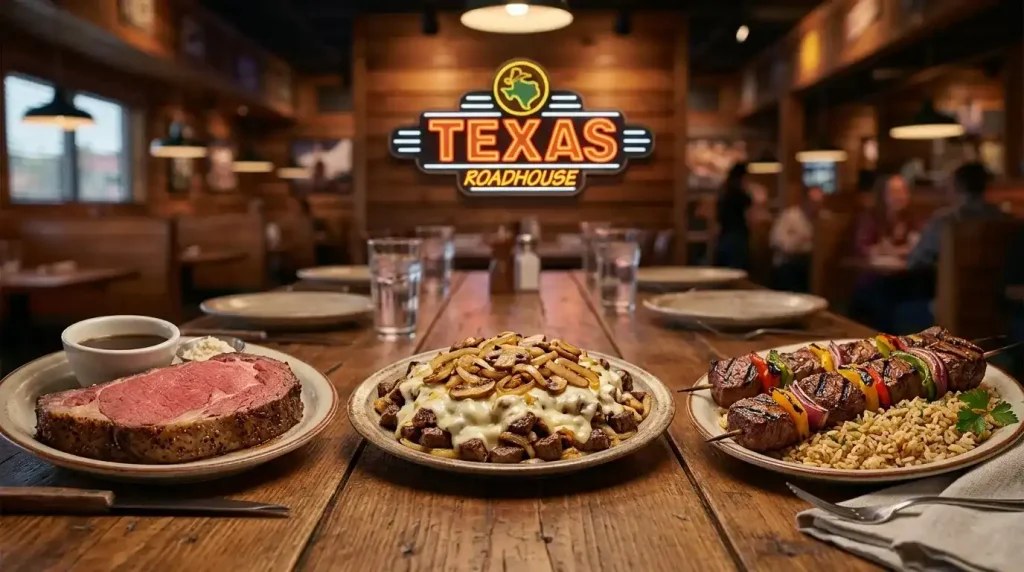
Slow-roasted rather than grilled to order, Prime Rib is typically a weekend feature Friday through Sunday at most locations, while supplies last and usually not available at lunch. Sizes generally run 10-16 oz depending on the cut, starting at $25.99 and around 950 calories. It’s worth calling ahead if it’s the reason for the trip, since availability varies by restaurant
Road Kill
Despite the name, there’s nothing unusual about the meat — it’s chopped sirloin steak, smothered in sautéed onions, sautéed mushrooms, and melted jack cheese. At $12.49 and 760 calories, it’s one of the least expensive steak-based options on the menu and a longtime favorite for the amount of flavor it delivers for the price.
Steak Kabob
Skewered chunks of hand-cut sirloin, grilled with vegetables and served over rice. At $19.49 and 920 calories, it’s a good option for guests who want steak flavor in a lighter, shareable format rather than a full single cut.
Sirloin vs. Ribeye vs. Filet vs. T-Bone: Which Should You Order?
When it comes to steak, choosing the wrong cut can turn a pricey dinner into a tough, disappointing ordeal. Comparing these iconic cuts ensures you order the Best Texas Roadhouse Steak every single time.
| Cut | Tenderness | Flavor | Leanness | Starting Price | Best For |
|---|---|---|---|---|---|
| Hand-Cut Sirloin | Firm | Bold, beefy | Leanest | $13.49 | Value, first-time visitors |
| New York Strip | Tender | Bold, balanced | Moderate | $22.99 | A middle ground between sirloin and ribeye |
| Dallas Filet | Most tender | Mild, delicate | Very lean | $26.99 | Tenderness over intensity |
| Ft. Worth Ribeye | Very tender | Rich, buttery | Most marbled | $24.99 | Diners who prioritize flavor |
| Bone-In Ribeye | Very tender | Richest, most intense | Most marbled | $29.99 | Special occasions, big appetites |
| Porterhouse T-Bone | Tender (both sides) | Two cuts in one | Moderate | $28.99 | Sharing, or not wanting to choose |
What Comes With Every Steak Order?
Most hand-cut steak entrées include a choice of two sides, only Steak Kabob is served with seasoned rice and one side, so you never have to worry about ordering extras just to build a full plate.
- Two Made-from-Scratch Sides: Options include baked potato, sweet potato, mashed potatoes, green beans, buttered corn, seasoned rice, steamed vegetables, or side salads.
- Unlimited Fresh-Baked Rolls: Served warm with fresh honey-cinnamon butter at no additional charge.
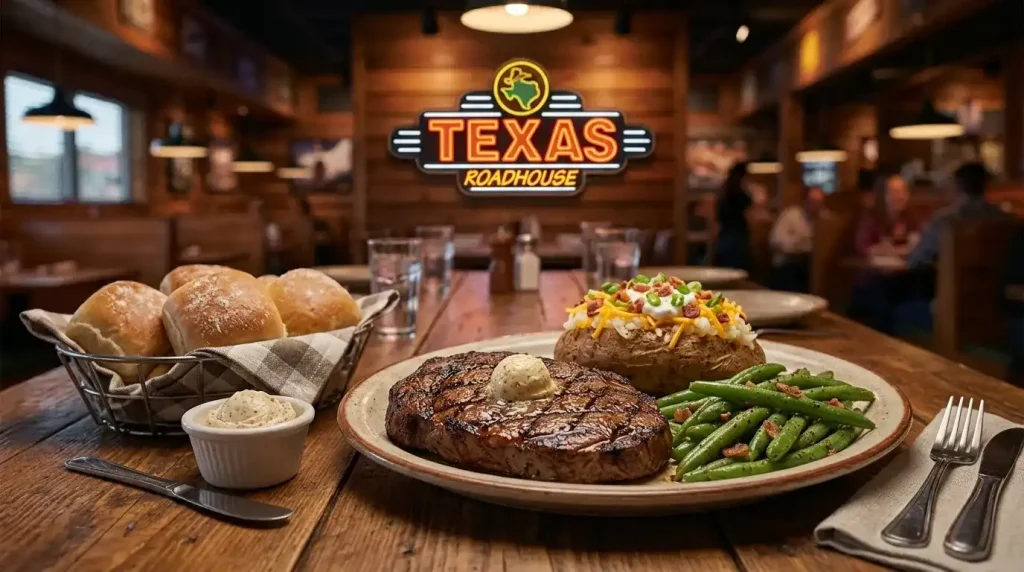
Want to start the meal lighter? Several items on the Texas Roadhouse Salads Menu including the Steakhouse Filet Salad, pair sliced steak with fresh greens if you’d rather not commit to a full plate.
Why Texas Roadhouse Steak Prices Are Rised in 2026
Fact Box: It’s also worth knowing what’s happening behind the price tag industry-wide. The U.S. cattle herd fell to its smallest size since 1951 heading into 2026, and retail steak prices were running about 16-17% higher than a year earlier by mid-2026, according to Bureau of Labor Statistics data reported by CNBC. That’s a beef-industry-wide trend, not something specific to Texas Roadhouse, but it helps explain why steak menu prices can change over time. It’s part of why a hand-cut sirloin, still starting at about mid-$13 in most markets, remains one of the more shielded steak values in casual dining right now.
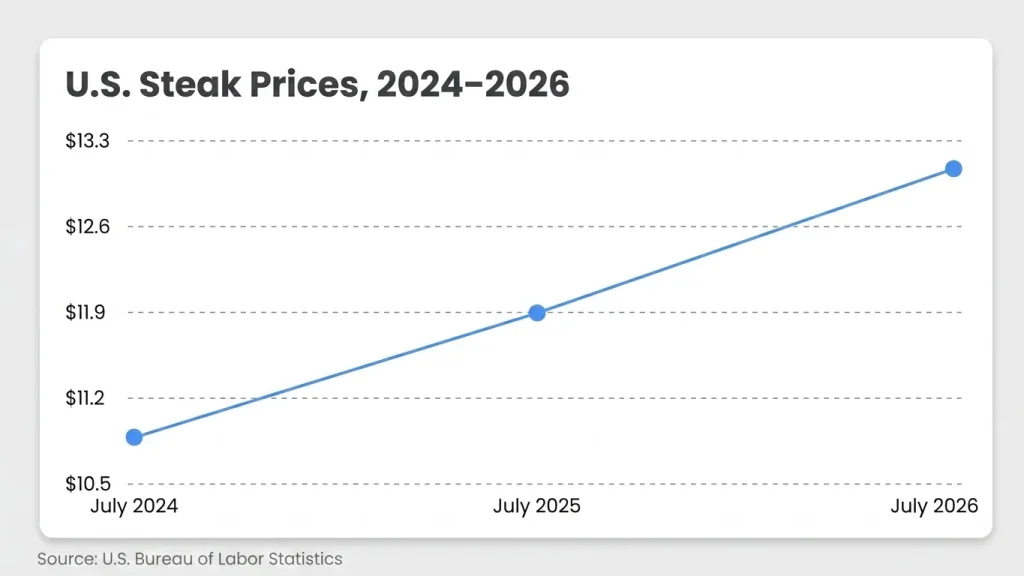
U.S. steak prices have climbed steadily over the past two years. The average retail price for uncooked beef steaks increased from $10.86 per pound in July 2024 to $11.88 in July 2025 and $13.06 in July 2026—a roughly 20% increase over two years, based on U.S. Bureau of Labor Statistics data.
Protein and sodium for the most-ordered cuts:
Keep your macros on track by checking the protein and sodium content of Texas Roadhouse’s most popular cuts before you order.
| Steak | Calories | Protein | Sodium |
|---|---|---|---|
| Hand-Cut Sirloin (6 oz) | 250 | 46 g | 560 mg |
| Ft. Worth Ribeye (10 oz) | 800 | 65 g | 980 mg |
| Ft. Worth Ribeye (12 oz) | 960 | 78 g | 1,180 mg |
| Ft. Worth Ribeye (16 oz) | 1,280 | 103 g | 1,570 mg |
| Bone-In Ribeye (20 oz) | 1,480 | 143 g | 1,720 mg |
For the complete breakdown across every menu category, including sides, sauces, and toppings, see the Texas Roadhouse Nutrition Information guide.
How to Get the Best Value on Texas Roadhouse Steaks
A hand-cut steak dinner doesn’t have to be the most expensive way to eat here. A few of the most reliable ways to save:
- Order during Early Dine. Monday through Thursday, generally 3-6 p.m. (hours vary by location), Texas Roadhouse offers a short list of complete dinners — often including the 6 oz sirloin — for close to $3 less than the regular menu price. See the Early Dine Menu for current hours and included items.
- Come for lunch. The Lunch Menu features smaller hand-cut steak portions at lower prices than dinner, still with two sides and rolls included.
- Buy family-sized. For groups, the Family Meals menu packages hand-cut sirloins to-go at a lower per-person cost than ordering individual dinners.
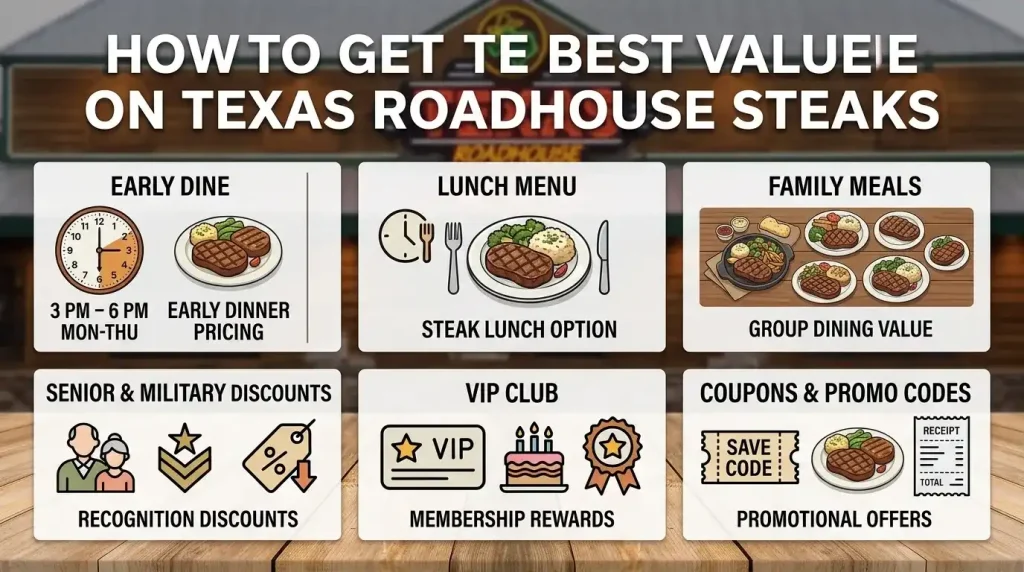
- Check senior and military discounts. Many locations offer a senior discount and a military discount, typically in the 10-15% range, though availability depends on the restaurant.
- Join the VIP Club. Signing up for the Texas Roadhouse VIP Club is free and typically includes a birthday reward plus occasional email-only offers.
- Check current coupons before you order. Steak-specific discounts are rare, but it’s worth a quick look at current coupons and promo codes, especially for takeout.
FAQs: Frequently Asked Questions
- • Official restaurant websites
- • Public announcements when available
- • Trusted public sources
- • Public customer discussions for additional context
- • Regular updates when information changes